Be yourself; Everyone else is already taken.
— Oscar Wilde.
This is the first post on my new blog. I’m just getting this new blog going, so stay tuned for more. Subscribe below to get notified when I post new updates.
Be yourself; Everyone else is already taken.
— Oscar Wilde.
This is the first post on my new blog. I’m just getting this new blog going, so stay tuned for more. Subscribe below to get notified when I post new updates.
Breastfeeding: Breastmilk and benefits
Contreras, B. Nadia; Gregorio G. Vanesa; Mateo, Q. Ma. Guadalupe; Mondragón, M. Jeimi; Lopez, D.J. Yazmin; De Jesus, G. and Valdez R. Sthefania N.
Abstract
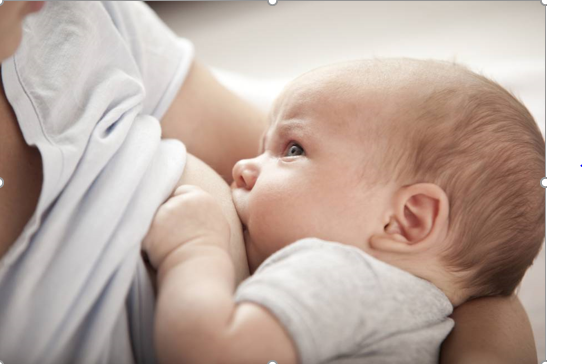
Breastfeeding is the ideal way to provide young children with the nutrients they need for healthy growth and development. Virtually all women can breastfeed.
Human breast milk is the natural food produced by the mother to feed the newborn. It is recommended as an exclusive food for the infant until six months of age and with complementary feeding until two years of age, since it contains the majority of the nutrients necessary for its correct growth and development.
Although the exact properties of breast milk are not fully known. It contains the appropriate amounts of carbohydrates, proteins and fats, also provides vitamins, minerals, digestive enzymes, hormones and antibodies from the mother that can help the baby avoid infections, called immunoglobulins.
that is, all the nutrients that a developing infant will require.
Breastfeeding provides multiple benefits for the health of the mother and especially the baby, as well as economic benefits for the family and social.
Rare cases in which it is contraindicated that a woman can breastfeed are usually when they put the health of the baby who is going to be breastfed at risk.
Resumen
La lactancia materna es la forma ideal de proporcionar a los niños pequeños los nutrientes que necesitan para un crecimiento y desarrollo saludables. Prácticamente todas las mujeres pueden amamantar.
La leche materna humana es el alimento natural producido por la madre para alimentar al recién nacido. Se recomienda como alimento exclusivo para el lactante hasta los seis meses de edad y con alimentación complementaria hasta los dos años de edad, ya que contiene la mayoría de los nutrientes necesarios para su correcto crecimiento y desarrollo.
Aunque las propiedades exactas de la leche materna no se conocen completamente. Contiene las cantidades apropiadas de carbohidratos, proteínas y grasas, también proporciona vitaminas, minerales, enzimas digestivas, hormonas y anticuerpos de la madre que pueden ayudar al bebé a evitar infecciones, denominados inmunoglobulinas.
es decir, todos los nutrientes que un infante en desarrollo requerirá.
La lactancia materna proporciona múltiples beneficios para la salud de la madre y sobre todo del bebe, así como también tiene beneficios económicos hacia la familia y sociales.
Son raros los casos en los que se contraindica el que una mujer pueda amamantar por lo general son cuando ponen en riesgo la salud del bebé que va a ser amamantado.
Breastfeeding is the ideal way to provide young children with the nutrients they need for healthy growth and development. Virtually all women can breastfeed, provided they have good information and support from their family and the health care system.
Who recommends exclusive breastfeeding for six months, the introduction of age-appropriate and safe foods thereafter, and the maintenance of breastfeeding up to 2 years or more.
Breastmilk
Human breast milk is the natural food produced by the mother to feed the newborn. It is recommended as an exclusive food for the infant until six months of age and with complementary feeding until two years of age, since it contains the majority of the nutrients necessary for its correct growth and development. It also contains immunoglobulins and other substances that protect the baby against infections and helps strengthen the mother and child bond, favoring an adequate psychomotor development.
It is also recommended to extend breastfeeding up to two years or more according to WHO recommendations. Infections and allergies are more rare in breast-fed children than bottle-fed children. While it is true that the child comes to the world protected by antibodies, this protection disappears at birth and the immunoglobulins or antibodies present in breast milk take their place and protect him until his own body generates them. The baby receives the first milk during the first days of life, this milk, also called colostrum is very nutritious, thick and yellowish, provides important antibodies that strengthen your immune system and cover the intestinal wall.
Composition
Breast milk is a changing fluid as it adapts to the infant’s requirements over time, depending on the energy needs and development of the newborn. This is how its composition is suffering variations throughout breastfeeding and also during the day. Among the substances that have circadian variations are nucleotides, some have their acrophase during the day and others during the night.
Although the exact properties integrated into breast milk are not completely known, the nutritional content after this period is relatively constant and obtains its ingredients from the mother’s food supply. If that supply decreases, the content is obtained from the mother’s body reserves. The exact composition of breast milk varies from day to day, from take to take, even depending on whether it is day or night, depending on the consumption of food, the environment, the age of the baby. It must also be taken into account that the proportion of water and fat fluctuates. The milk released at the beginning of a meal is watery, low in fat and high in carbohydrates, while the milk at the end of the meal is richer in fat, thus being more satiating. The breast can never really be «emptied» since milk production is a continuous biological process: the greater the baby sucks, the greater the milk production.
Although it is currently recommended worldwide, in the mid-twentieth century the practice of breastfeeding with breast milk went through a period in which it was considered out of fashion and artificial milks were used that were even considered superior to breast milk.
Benefits of breastfeeding for the baby
Benefits of breastfeeding for the mother
Contraindications
Conclusions
Breastfeeding is the ideal way to provide young children with the nutrients they need for healthy growth and development.
It contains all the nutrients and substances necessary for the proper development of the child.
It is considered the first vaccine because it protects the baby from future diseases by providing antibodies.
All women can breastfeed except for specific cases that endanger the health of the mother or the baby.
It has too many benefits to the mother’s health.
It has economic, social and ecological benefits since you don’t have to buy milk formulas and it doesn’t pollute the environment.
Most of the benefits are for the baby as it helps prevent diseases and allows a correct mental and physical development.
Breastfeeding is an act of love that unites the mother with her baby.
References
This is an example post, originally published as part of Blogging University. Enroll in one of our ten programs, and start your blog right.
You’re going to publish a post today. Don’t worry about how your blog looks. Don’t worry if you haven’t given it a name yet, or you’re feeling overwhelmed. Just click the “New Post” button, and tell us why you’re here.
Why do this?
The post can be short or long, a personal intro to your life or a bloggy mission statement, a manifesto for the future or a simple outline of your the types of things you hope to publish.
To help you get started, here are a few questions:
You’re not locked into any of this; one of the wonderful things about blogs is how they constantly evolve as we learn, grow, and interact with one another — but it’s good to know where and why you started, and articulating your goals may just give you a few other post ideas.
Can’t think how to get started? Just write the first thing that pops into your head. Anne Lamott, author of a book on writing we love, says that you need to give yourself permission to write a “crappy first draft”. Anne makes a great point — just start writing, and worry about editing it later.
When you’re ready to publish, give your post three to five tags that describe your blog’s focus — writing, photography, fiction, parenting, food, cars, movies, sports, whatever. These tags will help others who care about your topics find you in the Reader. Make sure one of the tags is “zerotohero,” so other new bloggers can find you, too.

 Título del sitio web